
Transport Truck Collisions in Northwestern Ontario: Why the Investigation Is Different
After a serious collision with a transport truck, you may be waiting for the police to explain what happened. The police report is important, but it may not answer every question relevant to an injury claim. When were the truck’s brakes last repaired? What did the driver’s working day involve? Did a camera record the approach to the collision?
Commercial trucking can leave a trail of records that does not usually exist after a collision between two private vehicles. Finding those records—and understanding what they actually show—can make a difference to the investigation.
In Northwestern Ontario, there is also the problem of distance. A collision may happen hours from the nearest investigator. By the time a family starts asking questions, the vehicles may have been towed to different communities, witnesses may have continued their trips, and snow or recovery work may have changed the scene.
There are useful steps that can be taken while the police investigation continues. They do not require the injured person or their family to investigate the collision themselves.
What to look for beyond the collision report
The report is a starting point. Depending on the investigation, police may also have photographs, measurements, witness statements, video and collision reconstruction material. Identifying what police collected helps establish what is known and what still needs to be investigated.
For example, where a vehicle came to rest is not necessarily where the impact occurred. Damage, debris and tire marks may help establish the vehicles’ paths. A photograph taken before the wreckage was moved can be valuable even if it does not seem remarkable at first.
Other questions concern what the drivers could see. A curve, hill, snowbank or obstruction may affect the view on the approach. Road markings, signs, weather and the condition of the pavement also need to be considered. A later site visit can help with measurements and sightlines, but bare pavement photographed a week later does not establish what the road was like that morning.
Dashcam footage and recordings from nearby businesses or homes are worth identifying promptly. In a remote location, there may be no nearby camera. A passing motorist’s account may be one of the few independent descriptions of conditions before the collision.
A serious case may require a reconstruction engineer to assess these sources together. The work should be directed at the questions that matter in that collision; not every case needs the same experts or inspections.
Does the truck have a “black box”?
There is no standard answer. Transport trucks have different engines, electronic systems and aftermarket equipment. Before anyone promises a download showing what happened, they need to identify the particular truck and its systems.
An engine control module, or ECM, or another onboard system may retain information about speed, braking inputs or engine operation around a recorded event. The available information and recording triggers vary. An expert must establish whether a saved event relates to this collision and whether its timing can be reliably matched with other evidence.
A truck may also have cameras, GPS tracking or telematics systems that send vehicle information to a fleet manager or outside provider. That information may be stored somewhere other than the truck. None of these systems should be assumed to have recorded the collision.
Transport Canada’s guidance on heavy-vehicle event data describes the differences and limitations that investigators need to understand.
The truck and trailer themselves may also need inspection. Brakes, tires, steering, coupling equipment and cargo securement can all be relevant. A broken component requires careful examination: it may have failed before the collision, during impact or while the vehicle was being recovered.
What the company’s records can show
A record is useful because it helps answer a question. If a mechanical problem is suspected, inspection reports and repair invoices may show when it was reported and what work followed. If the load shifted, shipping and loading documents may help identify its weight, how it was secured and who was responsible.
The driver’s work and rest
Hours-of-service records can help establish when a driver was driving, doing other work or off duty. An electronic logging device, or ELD, records driving time and assists with recording duty status. It serves a different purpose from a system that records collision-related events.
Where fatigue is in issue, those records may be compared with dispatch messages, fuel receipts and delivery times. A log showing off-duty time does not establish how much sleep the driver obtained. A discrepancy also needs an explanation before it is treated as evidence of wrongdoing.
Ontario’s hours-of-service regulation and the federal rules contain recordkeeping requirements and exemptions. The applicable rules depend on the operation. Federally regulated carriers operating across provincial or international boundaries fall under the federal hours-of-service regime.
Maintenance, dispatch and cargo
Depending on the circumstances, relevant records may include:
- Inspection reports, maintenance schedules and repair records.
- Dispatch instructions, trip documents and relevant communications.
- Driver licensing, qualification, training and supervision information.
- Bills of lading, loading documents and weight information.
- Ownership, leasing and carrier records.
- Weigh-scale tickets and roadside inspection records, if generated.
Some of these records are legally required. Ontario’s commercial-vehicle inspection rules require specified inspection and maintenance records where they apply. Hours-of-service rules impose their own recordkeeping obligations, subject to exceptions. Businesses may produce additional records for scheduling, billing or managing their vehicles.
That distinction matters. The investigation needs to establish what was required, what was actually created and what remains available. Access may require agreement, disclosure during a lawsuit or a court order.
Who was responsible for the truck and the trip?
The name on the trailer may not identify the driver’s employer or the business operating the truck. The tractor and trailer can have different owners, and maintenance or loading may have been done by another business.
Those relationships need to be established. Ontario’s Highway Traffic Act, including section 192, provides for liability of drivers, owners, lessees and commercial-vehicle operators in specified circumstances. A company may be legally responsible for negligent driving even without proof that its managers personally acted carelessly.
A repair business or a party that loaded or secured the cargo may also need to be investigated if its work could have contributed. A credible defect issue may require examining a manufacturer’s responsibility. Evidence of a road-condition problem may raise questions about a road authority or maintenance contractor.
Truck involvement does not establish fault, and a business connection alone is not a reason to sue. The evidence may support a claim against one party, several parties, or someone other than the truck driver. Each claim needs a factual and legal basis.
Keeping evidence available
Vehicles do not necessarily remain untouched after the road reopens. They may be moved, repaired or sent for salvage. Camera recordings and other electronic information can be overwritten, depending on the system. Business records can also be affected by routine deletion.
A lawyer can send a preservation letter identifying relevant vehicles, equipment and records and asking that they be kept. The request may include retaining original files, suspending deletion and allowing time to arrange an inspection before repairs or dismantling.
The follow-up matters as much as the letter. The carrier may hold the trip records, a service provider may hold camera footage, and a storage yard may control access to the vehicle. Someone needs to confirm where the evidence is and what has been done to preserve it.
A preservation letter is not a court order. It does not itself give access to private records or permission to download a truck’s data. Access must be arranged by agreement or, where necessary, through the court. There is no single retention period or preservation deadline that applies to every source of evidence.
The practical difficulties of investigating a Northern highway collision
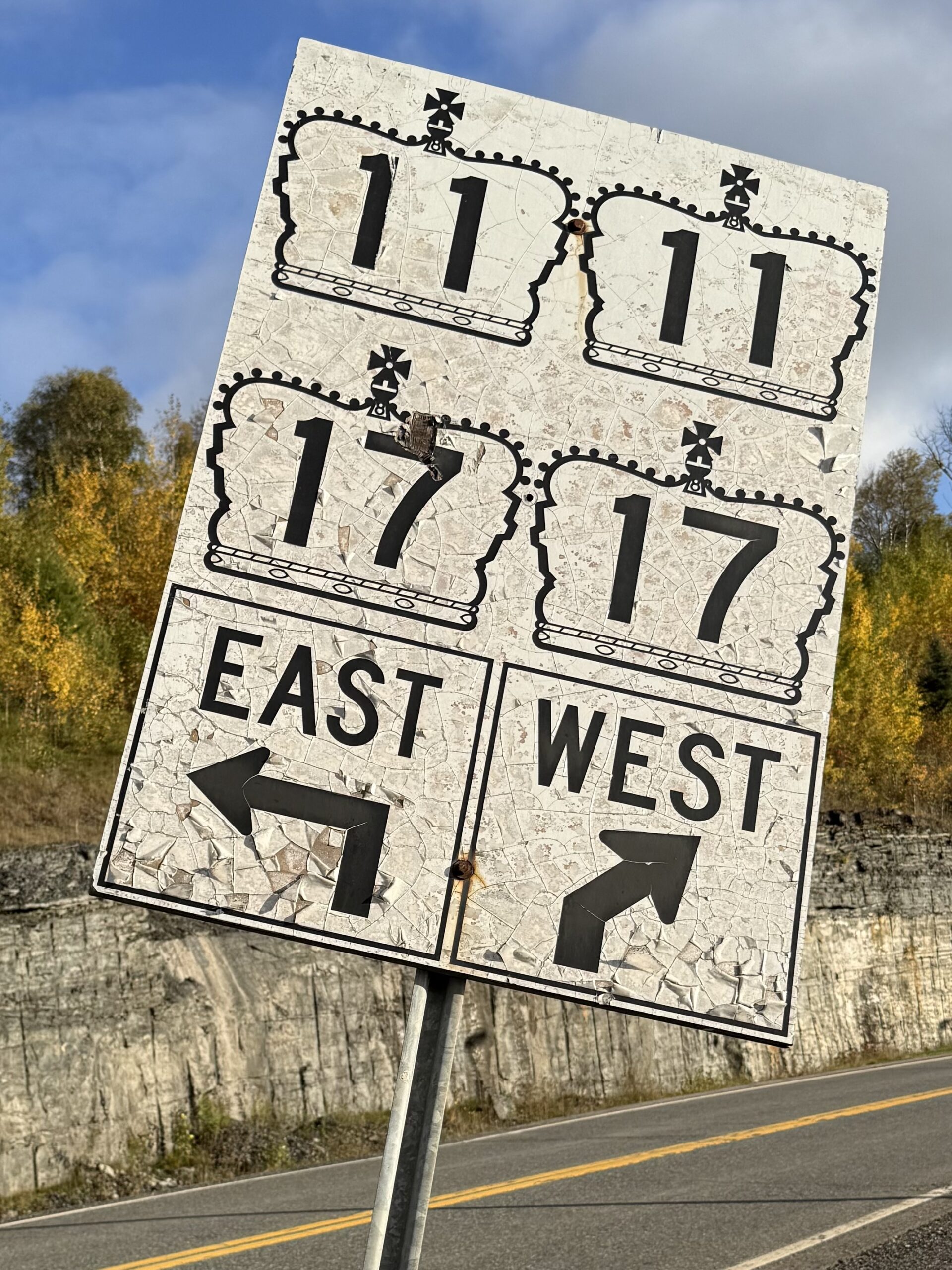
On Highway 11 through Greenstone, Highway 17 outside a community, or Highway 11/17 between Thunder Bay and Nipigon, getting an investigator to the scene can involve substantial travel. Weather and safe access affect when measurements and photographs can be taken.
That makes the material already collected particularly important. Who photographed the vehicles before towing began? Did anyone record the road on the approach? Can a witness be reached before the details become less clear? A commercial driver who witnessed the collision may be hundreds of kilometres farther along their route by the time someone seeks their account.
Winter conditions require specific evidence. Snow covering a lane marking, visibility during a squall and ice on the pavement are different issues. A general statement that the weather was bad does not explain what a driver could see or how the vehicle was being driven.
If road maintenance is genuinely in issue, the investigation must also address the responsible authority and the maintenance work. WML’s article on claims involving unsafe winter highways discusses those cases.
There is a separate logistical problem once the vehicles have been recovered. A badly damaged tractor may go to one yard, the trailer to another and the cargo elsewhere. Parts may be removed separately. Arranging an inspection means locating the relevant items, finding out who controls access and checking whether another move, repair or salvage sale is planned.
Showing what the injuries have changed
Even when responsibility is clear, the claim still needs evidence of the injuries and their consequences. A diagnosis alone does not tell us whether someone can return to their job, manage their home or live independently.
A return to work can also mean different things. Someone may be working fewer hours, relying on coworkers for physical tasks or using all their energy to get through a shift. Employment records, medical evidence and, where needed, a vocational assessment can help explain whether that return is sustainable and what it means for future earnings.
At home, family members may quietly take over driving, cooking, cleaning, snow clearing or personal care. That help should be documented even when nobody sends an invoice. An occupational therapist can assess how the injuries affect everyday tasks and what assistance or equipment is needed.
More serious injuries may require evidence about future treatment, rehabilitation, attendant care, accessible transportation and home modifications. Family observations can help explain changes in memory, mood or behaviour that are not apparent during a short appointment. The claimed losses must be connected to the collision and assessed under the applicable insurance and damages rules.
For a person living outside Thunder Bay, access to care needs particular attention. An appointment can mean a day away from work, a long drive and someone else taking time off to accompany them. Some treatment requires overnight stays or travel beyond the region. A future-care plan needs to address which services are actually available, where they will be provided and how the person will get there.
Help through accident benefits
Ontario accident benefits may provide support regardless of who caused the collision. They are separate from a lawsuit, although payments and claims can affect one another.
Under the changes introduced in July 2026, medical, rehabilitation and attendant-care coverage remains mandatory, while other accident benefits are optional. Existing coverage can continue under transition rules. The policy, accident date and injured person’s eligibility must be checked. Our guide to Ontario’s optional accident benefits explains the changes.
“Catastrophic impairment” is a defined accident-benefits classification that can allow access to higher treatment and care limits. It depends on specific criteria, not simply the seriousness of the crash. A person can have a substantial injury claim without meeting that classification.
Available liability insurance and any applicable family-protection coverage also need to be identified. Our article on liability limits and underinsured coverage explains why those policies matter.
What to keep and what to ask
Medical care comes first. Beyond that, the most useful early steps are manageable:
- Keep the police occurrence number and the investigating officer’s contact information.
- Save original photographs, videos, dashcam files, messages and documents, with backups.
- Notify the appropriate insurer promptly and ask about benefit applications and deadlines.
- Find out where your vehicle is being stored and whether repair or disposal is planned.
- Keep receipts and a simple record of missed work, treatment travel and help provided by others.
- Obtain legal advice about preservation and deadlines in a serious case, without waiting for the full police report or a final prognosis.
You should not return to an active scene or stop on the highway shoulder to investigate. You also do not need to obtain the trucking company’s records yourself. A family member can make an initial legal inquiry if the injured person cannot.
Questions that come up after a serious collision
Should we wait until the police investigation is finished?
You can seek legal advice while it continues. A lawyer can consider preservation, insurance and deadlines before the final report is available. Waiting for police does not automatically suspend civil or insurance deadlines.
Our insurer wants to repair or dispose of the vehicle. What should we do?
If the vehicle may be important to understanding a serious collision, raise that promptly with the insurer and your lawyer before authorizing work or disposal, where practicable. Ask whether an inspection is needed. Storage charges and salvage deadlines also need attention. An inspection should be arranged promptly, with a plan for storage costs and what happens to the vehicle afterward.
What if snow or ice contributed?
Weather alone does not determine responsibility. The investigation may examine speed, following distance, visibility, vehicle condition and road maintenance. Claims against road authorities have particular requirements, defences and possible notice deadlines.
What if the truck or injured person is from another province or the United States?
That does not, by itself, prevent an Ontario claim. It can affect insurance, access to records, service of court documents and where proceedings should be brought. Those issues need advice based on the particular collision and the people and businesses involved.
What if someone was killed?
Where another party is legally responsible, eligible relatives may have claims under Ontario’s Family Law Act for financial losses and loss of care, guidance and companionship. Estate issues and available death or funeral benefits also need review. A family can obtain advice about preserving evidence while waiting for the police findings.
About the author

By Jeff Moorley
Partner, White Macgillivray Lester LLP
I represent injured people and families throughout Northwestern Ontario from our office in Thunder Bay. My motor vehicle collision practice includes serious truck collisions and fatal accident claims.
If you would like to discuss a serious collision involving you or a family member, email jeff@tbayinjurylaw.com to arrange a free consultation. You do not need to have the police report before getting in touch.
This article provides general information, not legal advice about a particular collision. Sending an email does not, by itself, create a lawyer-client relationship.